Holograms & Communication
Communication
and Power
Power Imbalances

In a conflict situation, one person is perceived to have more personal
power to obtain their needs than another. "If one party has
more power than the other, the conflict is unbalanced; many of the choices
the parties make are attempts to alter these imbalances."(Hocker
& Wilmot,pg 87) When this energy is blocked, it doesn't just
disappear. It has been focused on the goal, and now it needs to
use or release that energy. The energy may turn into negative energy,
because it didn't complete its intended goal. Instead of a positive
force used to achieve a goal, the energy turns into a negative force that
is focused on overpowering the other's energy.
There are several things that the lower-power person can do to release their negative energy. One way is to try and gain more energy to try to overpower the other's energy. For instance, the low-power person may tap into their interpersonal power and recruit a third party and combine resources with them to try to overpower the other.
Another way is to turn that negative energy or frustration toward a third party, but this is propagating frustration throughout the universe. Usually it is other lower-power people, such as children, minorities, and women, who receive the most negative energy and "overpowerment."
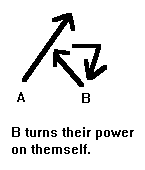
The third way is to turn that energy on yourself. These self-destructive acts are committed against yourself by saying things like, "I wasn't good enough", or "I didn't deserve it anyway." This usually leads to depression, or a lowering of personal power.
We are currently taking applications for listings and web page services. If you would like more information please call 444-9328 or email illusion@hologram.net and communicate your message of wholeness on the Internet.