Various Hologram Theories
1. Holographic Brain Theory
Dr. Karl Pribram's whole brain theory states that the brain stores information throughout the whole brain. There is not a specific location for a specific memory. His book, "Languages Of The Brain" describes the neurological holographic process.

2. Intrapersonal Holograms
Paul Chivington describes a psychological hologram in his book "Seeing Through Your Illusions". My communication models are based on Chivington's psychological model. Communication takes place when we respond to stimulus. We store new information based upon our past experiences and what we experience in the present. Our new subconscious record will be projected in the future. Both Pribram and Chivington say that we store and project information through our subconscious mind holographically.
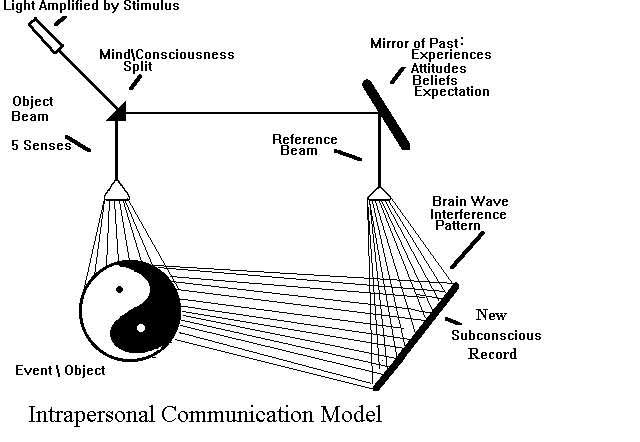
The object beam represents our 5 senses. I believe the lens represents how sharp our senses are. The lens becomes "clouded" when we loose our sensitivity to stimulus. When we reflect our sensory stimulus attention onto the object, we record the waves as a reflection of our sensory interaction.
The reference beam is a reflection of the mirror of our past experiences, beliefs, attitudes, and our expectations of the outcome of the future. It is the projection of your past hologram. The diffusion lens needs to be clear to project a clear representation of the past.
The two beams causes the interference pattern to be created in our brains. We project these old images onto future events. Chivington claims that we can change our reactions to present events by changing our attitudes and beliefs about our past experiences.
baar
3. Projecting Information
One reference beam is used to project a hologram. A white light can be used to view, or project, most holograms. But, to get the clearest image and the most perspectives, the light source used to project the image should have a coherency similar to the original light source. The waves of the reference beam will intersect with those on the film and reproduce the information of the image. The more intersections of waves, the clearer the image reproduced.
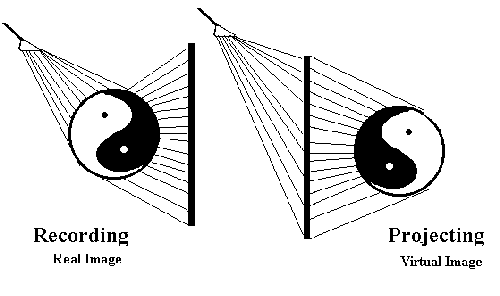
A hologram projected has an inverse relationship with the hologram recorded. Notice that the black side of the object is closest to the plate in both the real image and the virtual image.